
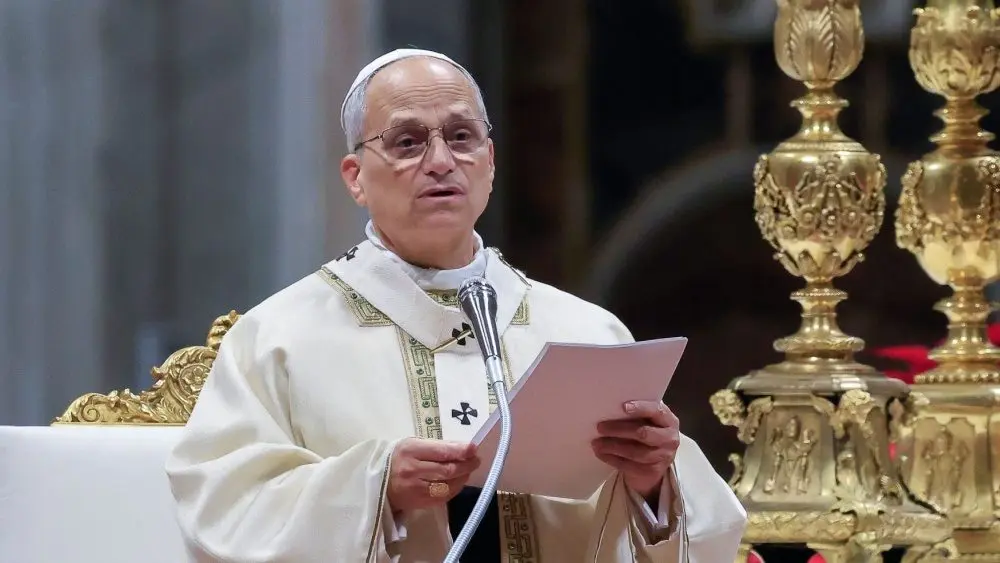
Pope Leo XIV has issued a major theological manifesto calling for aggressive global regulation and a deliberate slowdown in artificial intelligence development. The 42,300-word encyclical, titled “Magnifica Humanitas” (Magnificent Humanity), warns that unchecked technological expansion is destabilizing global peace and threatening the core of human dignity.
Signed on May 15, the document was intentionally timed to mark the 135th anniversary of “Rerum Novarum,” the 1891 papal text by Pope Leo XIII that championed workers’ rights during the Industrial Revolution. The current pontiff—a former mathematics student and history’s first American pope—emphasized that while “technology should not be considered, in itself, as a force antagonistic to humanity,” its rapid, profit-driven deployment poses unprecedented risks.
In a highly symbolic move, the Vatican presented the encyclical alongside Christopher Olah, co-founder of the multi-billion-dollar AI firm Anthropic. This partnership highlights the Holy See’s decade-long effort to engage tech leaders directly. Olah, who is not Catholic, welcomed the critique, acknowledging that tech labs function “inside a set of incentives and constraints that can sometimes conflict with doing the right thing.” He stressed the necessity of independent critics, noting: “we need more of the world — religious communities, civil society, scholars, governments — to do what His Holiness has done here: to take this seriously, to look closely, and to push events in a better direction.”
A central theme of the manifesto is the demand for “disarming AI,” which the Pope clarified “does not mean rejecting technology, but preventing it from dominating humanity.” Leo argued that “merely regulating it is insufficient; it must be disarmed, welcoming and accessible.”
The document outlines an expansive policy vision to protect society from corporate exploitation, including labor protections — asserting that “the pursuit of greater profits cannot justify choices that systematically sacrifice jobs,” societal stagnation which “creates a paradox of material progress and anthropological regression that undermines the foundations of a just and stable social peace,” and child safeguards, calling for immediate protections for youth against AI-generated misinformation and harmful content.
The encyclical levels sharp criticism at the military-industrial complex, stating that “the use of AI in warfare must be subject to the most rigorous ethical constraints, to guarantee respect for human dignity and the sanctity of life and to avoid a race to develop such arms.” Leo noted that “the growing ease with which autonomous weapons systems can be deployed makes war more ‘feasible’ and less subject to human control.” Because automated systems detach human judgment from lethal outcomes, the Pope declared traditional Catholic “just war” doctrines outdated. He cautioned that “humanity is slipping into a violent culture of power, where peace no longer appears as a responsibility to be taken on, but as a fragile interval between conflicts.”
In an unexpected addition to the text’s focus on human rights, Pope Leo XIV used a section on modern exploitation to issue the first explicit papal apology for the Vatican’s historical role in European colonialism, specifically condemning past decrees that legally sanctioned the enslavement of non-Christians.
Editorial credit: Riccardo De Luca – Update / Shutterstock.com